
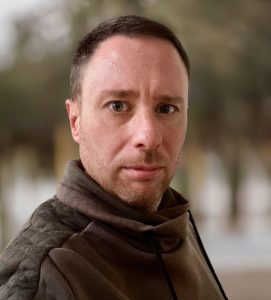
My name is György Márió Kővári. In the autumn of 1997, I embarked on a journey to write a science fiction novel I titled Star Siblings. Within these pages, I invite you to explore the genesis of this universe: how the story and its characters first took shape, the inspirations that fueled my imagination, the themes I sought to bring to life, and how the narrative has evolved throughout the decades of its creation.
Premise:
A young man’s life is defined by a single purpose: finding the sister who was spirited away as an infant when their homeworld fell to a ruthless, conquering race. Though destiny eventually reunites them, their true journey begins only when they discover that her new home is threatened by the same shadow that once reduced their past to ashes.
I have been immersed in the worlds of Star Wars novels since 1992. Over time, I began to wonder if I could craft something of my own. Having already penned a comic book and several early, unfinished story drafts, the allure of science fiction grew too strong to ignore. I was driven by a youthful, perhaps naive, ambition: I figured if Timothy Zahn or Kevin J. Anderson could build such worlds, then so could I.
Yet, I never sought to create a mere imitation. My goal was to forge something original. While the influence of that ‘galaxy far, far away’ was inevitable, I set strict boundaries from the start. In my universe, there are no robots. I wanted to keep the narrative as grounded as possible, preserving my favorite fantastical motifs while ensuring that the plot and characters were never overshadowed by the setting. In Star Siblings, the story is the heart; the environment is the stage.

It was during this formative period that I first read Isaac Asimov’s The Exploding Suns, which featured a quote from the Renaissance polymath Nicholas of Cusa. His vision—transcending the boundaries of the 15th century—so captured my imagination that I chose it as the tagline for my novel.
The universe, as revealed by modern science, is of an incomprehensible scale. To believe that intelligent life exists solely on Earth—whether in the distant past or at this very moment—seems an impossibility. In 1960, astrophysicist Frank Drake formulated his famous equation to estimate the number of communicative civilizations in interstellar space. Even by conservative estimates, once we extrapolate those figures across billions of galaxies, the potential for life reaches into the millions, if not billions. While much remains theoretical, it is a concept that demands wonder from any open mind.
As the great Carl Sagan once said:
‘If we are alone in the Universe, it sure seems like an awful waste of space.’
I find it profoundly unlikely that life evolved only once, on a single ordinary planet orbiting an ordinary star. The laws of physics, chemistry, and biology are universal constants. The same processes and coincidences that birthed life on Earth can, and undoubtedly have, occurred elsewhere. Given fourteen billion years, the seeds of life have had ample time to flourish and evolve across the cosmos.Life, in all its varied forms, is likely one of the most natural phenomena in the universe. If the conditions allow, it will find a way. We were lucky—why shouldn’t others be? This conviction became the cornerstone of my world-building and the ultimate catalyst for writing this novel.